Perpetual Futures and the Clarity Act
Here are some insights into what I think is happening in the legislative negotiations and the financial industry lobbying for creating the guide rails for the Digital Asset (Crypto) marketplace. Hold on to your caps and button up because this is going to be a battle. The banks are scared of competition and don't want their moat bridged and the public doesn't yet know what it wants.
The Real Focus of the Clarity Act
If you’ve spent any time reading the mainstream financial press lately, you’ve likely heard a lot of noise about the digital asset regulations shifting in Washington. The talking heads love to focus on retail investor protections or whether a particular digital token is a commodity or a security.
But if you want to know where the real, multi-trillion-dollar chess game is being played, you have to look past the retail headlines. The true institutional frontier isn't only about buying and holding digital coins in a regular account. It is also about a sophisticated financial instrument that has taken decentralized finance (DeFi) by storm: Perpetual Futures.
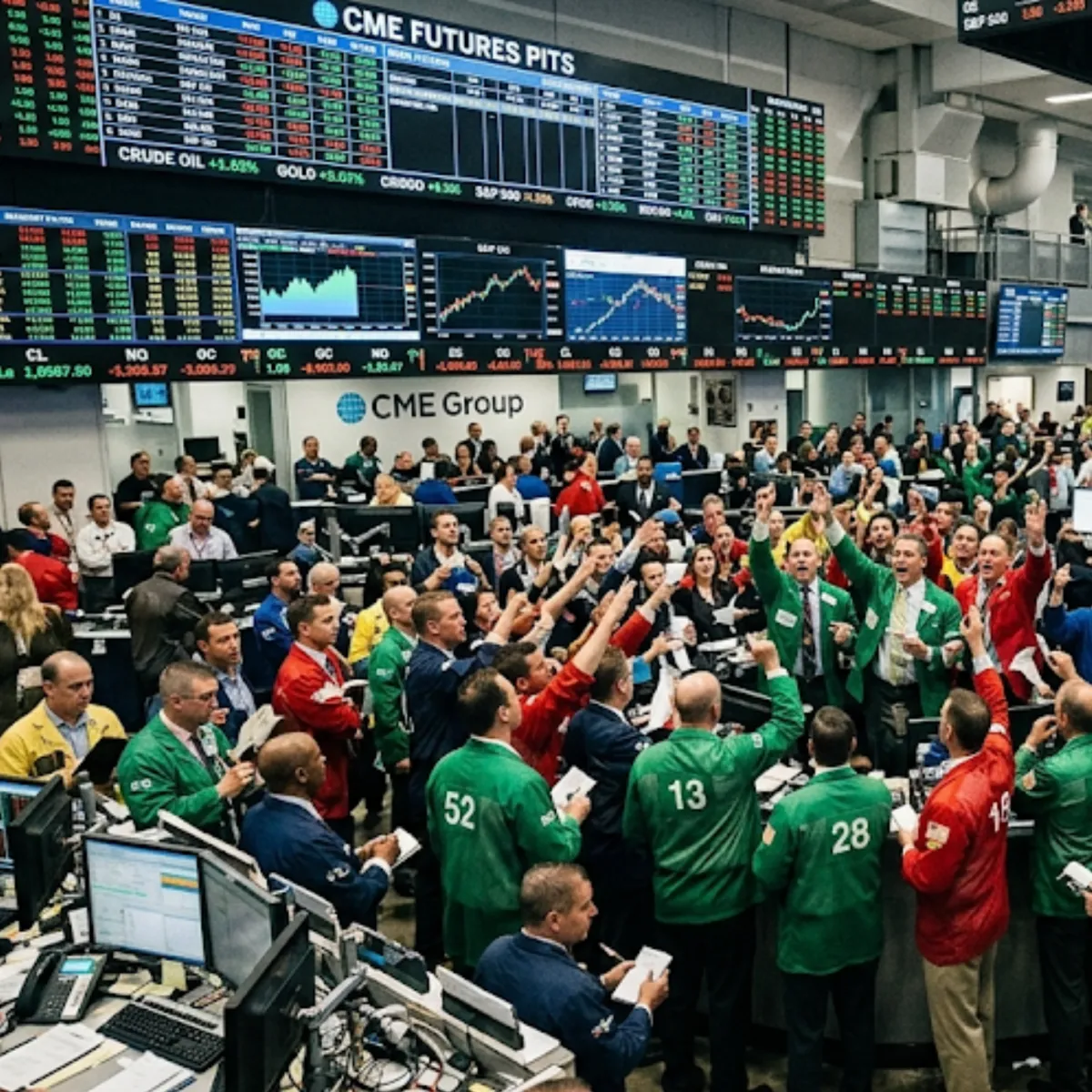
As I outlined in my book, Crypto = Digital Assets | Crypto Made Simple for Boomers & Gen X, seasoned investors don't chase the shiny objects; we look at the financial plumbing. And right now, Wall Street is salivating over the decentralized plumbing of perpetual futures. Why? Because the stock market is where folks admire the merchandise and the futures market is where the big boys haul the freight. The futures markets often transact 5-10 times the notational dollar value of the stock market daily.
Here is a straightforward, no-BS look at how this unique product works, why traditional finance (TradFin) desperately wants to use it, and how the upcoming regulatory Clarity Act could unleash an absolute avalanche of institutional trading volume.
What the Heck is a Perpetual Future?
In traditional finance, a standard futures contract is pretty simple to understand. It is an agreement to buy or sell an asset (like crude oil, gold, or Bitcoin) at a predetermined price on a specific date in the future—say, September 30th.
When that expiration date arrives, the contract settles. If you want to keep your financial position open, you have to manually exit the expiring contract and buy into a new one. In Wall Street terms, this is called rolling over the contract. It creates constant transaction costs, administrative friction, and unwanted tax wrinkles. You have to manage it constantly.
DeFi markets solved this problem by inventing something entirely unique: the Perpetual Future (often called a "Perp").
The Simple Definition: A perpetual future is a futures contract that never expires. You can buy it, hold it, and keep your investment position open for days, months, or years without ever having to roll over a contract.
The Teeter-Totter: How Perps Stay Tied to Reality
If a contract never expires, what stops its price from drifting completely away from the actual "spot" price of the asset? DeFi networks achieve this through a clever, automated mathematical mechanism called the Funding Rate.
Think of it as a financial teeter-totter that balances itself every few hours:
If the Perp price is too high compared to the actual market price, the buyers (longs) are forced to pay a small fee to the sellers (shorts).
If the Perp price is too low, the sellers (shorts) must pay a small fee to the buyers (longs).
This continuous, automatic payment system keeps the perpetual contract perfectly anchored to the real-world asset price, entirely eliminating the need for an expiration date.
Why Traditional Finance is Salivating Over DeFi Perps
Wall Street institutions do not trade digital assets like retail gamblers. They use derivatives to hedge risk, manage massive corporate balance sheets, and maximize capital efficiency.
DeFi perpetual futures offer three distinct advantages that traditional financial infrastructure simply cannot match:
Unprecedented Capital Efficiency: In DeFi, trades are managed entirely by transparent smart contracts. This allows institutions to deploy capital with precise leverage, backed by automated, programmatic liquidations that eliminate counterparty risk. No centralized broker can default on you when the rules are hardcoded into the ledger.
Zero Rollover Friction: By removing expiration dates, massive funds can maintain long-term hedging positions continuously. This strips away millions of dollars in annual brokerage fees and operational headaches.
24/7/365 Continuous Liquidity: Traditional markets close on weekends and holidays, leaving institutions exposed to global economic shocks for days at a time. DeFi perpetual markets never sleep, allowing real-world risk management to happen in real-time.
The Clarity Act: Breaking the Institutional Dam
Right now, the single biggest barrier keeping institutional trillions out of the DeFi (Decentralized Financial) perpetual markets is regulatory uncertainty. Large hedge funds, pension systems, and insurance conglomerates do not deploy capital into a legal gray zone.
This is why the legislative push behind the Clarity Act is the most critical regulatory milestone of our era.
The Clarity Act isn't designed to alter the underlying blockchain code; its purpose is to define the exact legal guardrails for institutional participation. Once this legislation establishes a clear regulatory framework—formally recognizing decentralized perpetual protocols, setting bank-grade custody rules, and granting a legal safe harbor—the institutional dam will break.
When major institutions are legally cleared to utilize decentralized perpetual futures, we will witness a volume explosion that dwarfs the current retail market. Wall Street will shift its liquidity wholesale onto public ledgers, transforming perpetual markets into the primary engine of global asset pricing.
The Bottom Line
The financial world is undergoing a profound replacement of its underlying plumbing. Perpetual futures represent a masterclass in technological efficiency—a uniquely digital financial product that traditional finance desperately wants to integrate into its daily operations.
As a pragmatist operating under the Crypto Codger brand, my strategy remains steadfast: I don't buy into the emotional retail hype, and I don't panic over short-term political noise. Identify where the structural capital is moving, understand the mechanisms driving that movement, and position safely before the rest of the market catches up.
To stay updated on how to safely navigate this evolving frontier with common sense and an old dog's discipline, find my regular market breakdowns at digital headquarters: https://www.thecryptocodger.com.
