Real World Assets Part 1
The Crypto Codger’s Guide to RWA - Part 1: Why the Global Finance Plumbing is Getting an Upgrade
I did a deep dive using the Google trend tool to determine the most searched for themes in Digital Assets and Crypto Tokenomics. The trend most obvious was that folks are interested in RWA tokenization. Real World Assets are beginning to become tokenized and tradeable on the blockchain networks we talk about all the time. So lets get into it!
If you’ve followed my career for the last few decades, you know I’ve seen the financial markets evolve from ticker tape and paper certificates to high-speed digital trading. But what’s happening right now in May 2026 is the most significant "plumbing upgrade" I have ever witnessed. This is the Tokenization of Real-World Assets (RWA).
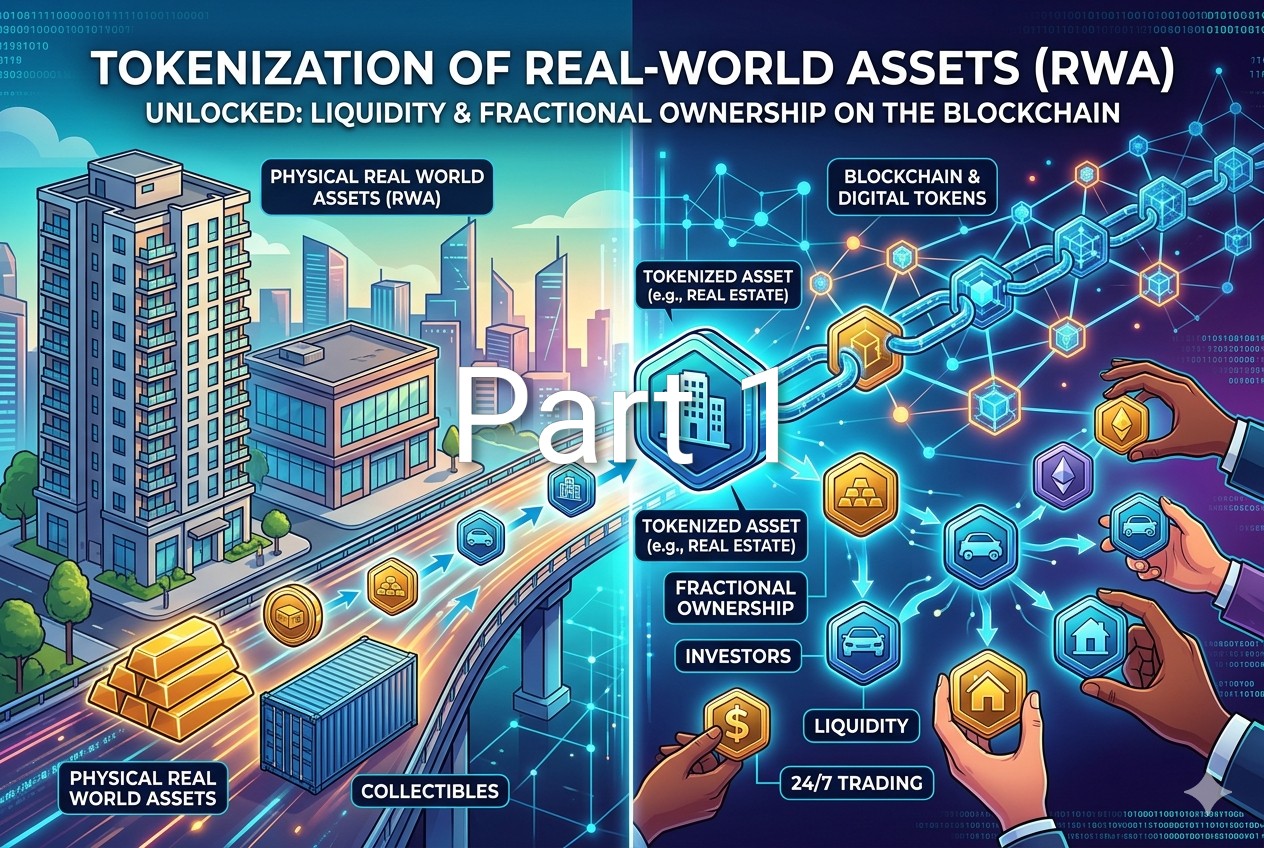
To keep it straightforward: Tokenization is simply the process of taking a "real" asset—think of a gold bar, a deed to a commercial building, a Stock share or a U.S. Treasury Bond—and representing it as a digital token on a blockchain. You can then trade it, use it as collateral, earn interest on it, collect dividends accrued to the shares it represents or the rents if it is a building and benefit from ownership.
Moving Beyond the Paper Chase
You might wonder why the massive financial institutions that run the world’s economy are suddenly so interested in this. It isn’t just about the technology; it’s about fixing a system that is, quite frankly, out of date. The software systems and even the programming languages used by many of the mature banking and financial institutions are from the 1970's and 80's!
In my experience, the "plumbing" of finance has always been slow. When you buy a stock today, it often takes more than a full day to actually settle. That’s a lifetime in a 24/7 world. Here is why the big players are making the move:
Instant Settlement: On a blockchain, the trade and the transfer of ownership happen simultaneously. We call this "T+0." No more waiting for clearing houses or back-office verification.
Fractional Ownership: Imagine wanting to invest in a $50 million apartment complex in Dana Point but only having $500. Through tokenization, that building can be split into millions of digital "bricks." You can own a piece of the pie without needing to buy the whole bakery.
Transparency and Security: Because these tokens live on a decentralized ledger, everyone can see the "audit trail" in real-time. You can’t fake a digital deed that is verified by thousands of computers.
The "Clean 16" Era
The most important development for us as investors is that the regulatory fog has finally being lifted. As of the recent joint rulings by the SEC and CFTC, we now have the "Clean 16"—a specific list of digital assets officially recognized as commodities. This means they can be traded just like corn or wheat or pork bellies.
This is the green light the "big money" has been waiting for. They can now build on these platforms with the same legal certainty they have when trading oil or gold. This shift is turning the blockchain from a speculative playground into the actual infrastructure of global finance.
But which of these recognized platforms is going to handle the heavy lifting? In my next post, I’ll break down the "thoroughbreds" in the Clean 16 and identify which tokens are positioned for the most appreciation as this trend goes mainstream.
Stick around—the best is yet to come.
