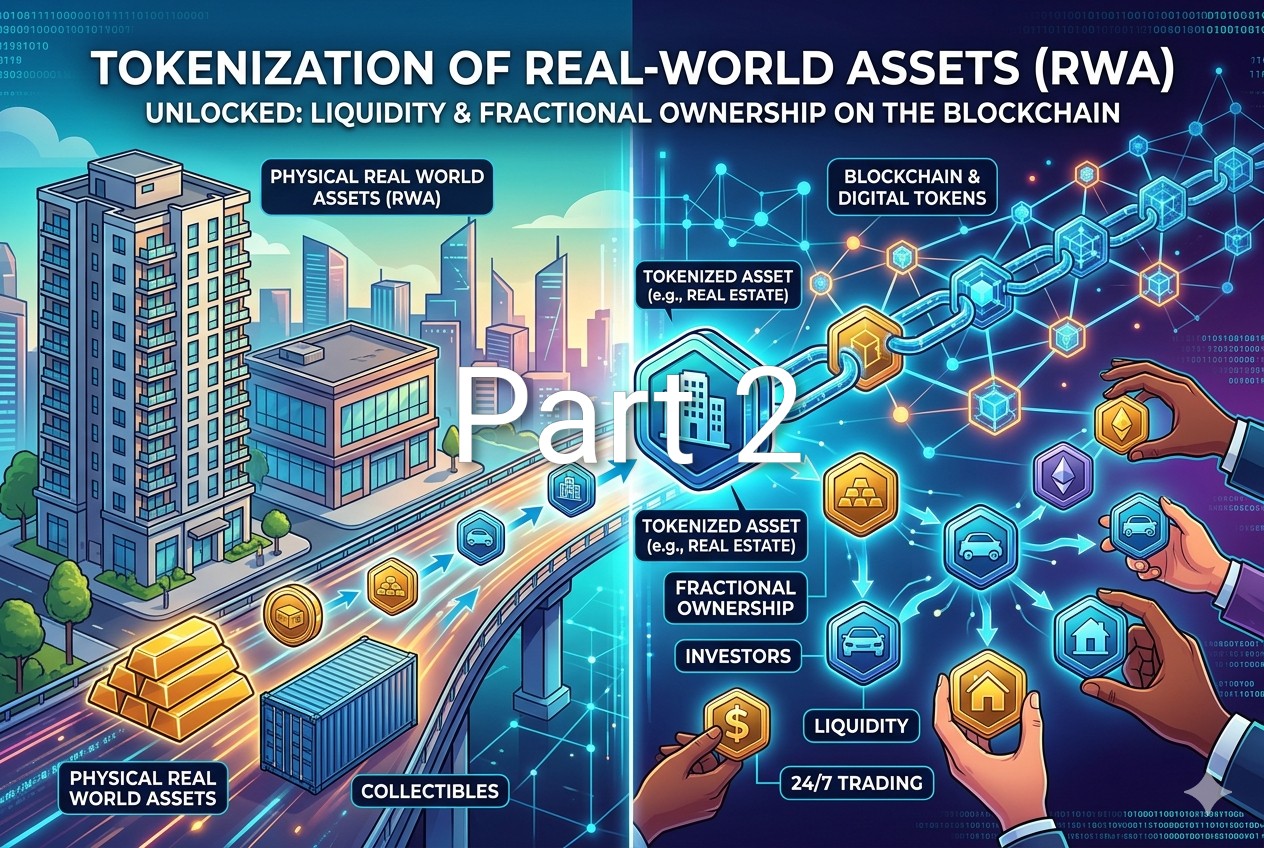
Real World Assets Part 2
The Crypto Codger’s Guide to RWA - Part 2: The Infrastructure Winners and the Path to Appreciation
Now that we understand why the world is tokenizing, let’s talk about the where. If you’re going to move trillions of dollars onto a digital ledger, you need a platform that is secure, fast, and—most importantly—recognized by the regulators.
As a veteran of the markets, I always look for the "infrastructure." In a gold rush, you don't necessarily want to be the guy digging for gold; you want to be the one selling the shovels. In the RWA revolution, the shovels are the blockchains and the data networks.
The Clean 16 Powerhouses
From the officially recognized list of 16 commodity tokens, three specific platforms stand out to me as the primary "highways" for real-world assets:
Ethereum (ETH): The Standard Ethereum is the "Bank Vault" of the digital world. It holds the vast majority of tokenized assets today because it is the most battle-tested. When a firm like BlackRock wants to launch a tokenized fund, they start here. Its security is unmatched, and in the world of finance, security is everything.
Solana (SOL): The High-Speed Rail If Ethereum is the vault, Solana is the high-speed trading floor. It can handle tens of thousands of transactions per second for a fraction of a penny. For assets that need to be traded rapidly—like tokenized stocks or high-frequency bonds—Solana is becoming the go-to destination.
Avalanche (AVAX): The Compliance King Avalanche has carved out a niche for "Subnets," which allow institutions to create their own private sections of the blockchain. This lets them follow strict banking rules while still benefiting from the speed of the public network.
The "Universal Connector": Chainlink (LINK)
If you asked me which token stands to benefit the most from the RWA trend, my eyes are on Chainlink.
Here is the simple logic: It doesn’t matter if a bank chooses Ethereum, Solana, or Avalanche. They all need a way to get "real world" data (like the current price of a house or the interest rate of a bond) onto the blockchain. They also need a way to talk to each other.
Chainlink is the "Universal Translator" and the "Secure Bridge" that makes this possible. Because LINK is part of the recognized "Clean 16" commodities, institutions can use its CCIP (Cross-Chain Interoperability Protocol) without fear of regulatory pushback.
The Bottom Line on Appreciation
When we talk about token appreciation, we have to look at utility.
As more assets move to Ethereum and Solana, the demand for those tokens to pay for transaction fees (gas) will naturally rise. If you need to know more about Ethereum transaction fees (gas) take my classes at the Crypto Codger College.
However, Chainlink (LINK) acts as the essential layer that connects them all. Every time a real-world asset is valued, moved, or settled across different chains, Chainlink is likely involved in the background.
In my decades of investing, I've learned that the winners are usually the ones that become essential to the system's survival. RWA tokenization is making these Clean 16 platforms essential. There are other important and growing blockchains that are not part of the Clean 16 and I don't mean to discount their potential, however I am inclined because of my conservative nature to stick to the regulatory darlings for now.
The "paper age" is ending. The "token age" is here. Make sure your portfolio is ready for the transition. To find out more about the Codger's Clean 16 MPT managed portfolio contact me through The Crypto Codger website at htpps://www.thecryptocodger.com
Class dismissed—keep your eyes on the charts and your feet on the ground.
