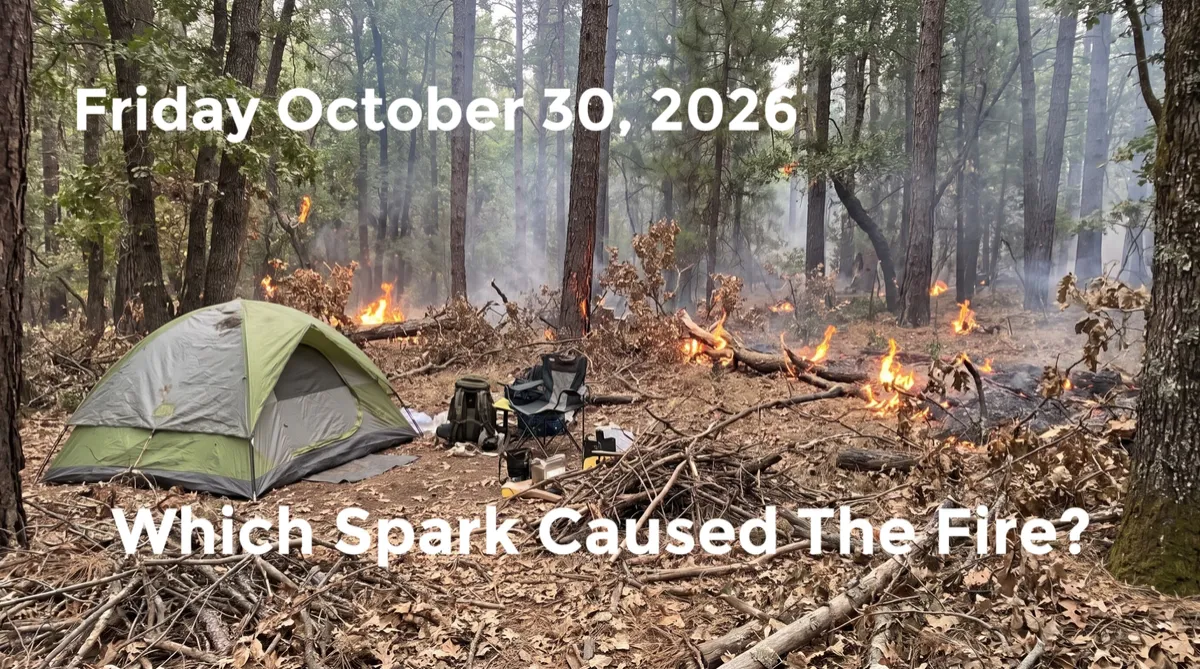
Which Spark caused the Fire?
Why One Spark Didn't Cause Friday's Fire
By: The Crypto Codger
If you spent any time watching the financial television networks on Friday, October 30, you probably saw the talking heads with their hair on fire. Bitcoin slid down into the $76,000 range, alternative digital coins took an even steeper tumble, and roughly $1.5 billion in borrowed trading positions got wiped off the board in twenty-four hours.
Naturally, the media needed a single villain to point at, and they found an easy one: the massive $6.3 billion security breach over at the Binance exchange.
Now, I am not going to sit here and tell you that a multi-billion-dollar heist at the world’s largest trading venue is nothing to sneeze at. In the early days of the American railroads, a brazen train robbery always made the front page of the newspaper. It spooked the passengers, bruised confidence, and caused a temporary panic at the ticket counter.
But after forty years of navigating market cycles—from my early days at Lehman Brothers in the late seventies through the 2008 financial crash—I have learned one fundamental truth: price is the headline, but structure is the story.
Blaming Friday’s entire market pullback on the Binance hack is like blaming a single tossed match for a forest fire while ignoring the fact that it hasn't rained in six months. The hack wasn't the root cause of the sell-off; it was merely the spark that landed on a pile of dry economic kindling.
The Macro Weather Report: A "Risk-Off" Storm
Digital assets do not live on a secluded island anymore. Because major Wall Street institutions and corporate treasuries now hold these assets, Bitcoin and its smaller cousins are wired directly into the global financial grid. When the broader economic weather turns sour, the biggest players on the block go into what finance folks call a "risk-off" environment.
Think of global investment capital like a family sailing a yacht. When the skies are blue and the breeze is warm, they let out all the sails, speed into deeper waters, and take some chances. That is a "risk-on" market.
Right now, however, the barometer is dropping fast. When a captain sees dark clouds gathering on the horizon, he doesn't wait for the hull to crack. He reels in the sails, battens down the hatches, and heads for the nearest concrete harbor. In the financial world, "heading for the harbor" means pulling cash out of high-growth assets—like technology stocks, Bitcoin, and alternative tokens—and parking it on the sidelines.
Why are the big institutional captains pulling down their sails? Look at the heavy headwinds currently battering the global economy:
Stubborn Interest Rates: In the market state framework, there is always a primary financial constraint—a "Liquidity Governor"—that sets the pace for everything else. Think of interest rates as the gravity of the financial universe. When the Federal Reserve keeps rates elevated, gravity gets heavier. Borrowing money becomes expensive, and when an institution can earn a guaranteed return just by holding boring government bonds, they feel far less urgency to keep cash parked in volatile markets.
International Conflict: Markets despise uncertainty, and geopolitical conflict is the ultimate wildcard. With escalating tensions overseas threatening global supply lines and trade routes, large investment funds naturally reduce their exposure to anything that swings wildly in price.
Skyrocketing Energy Costs: As we have discussed before, the physical world runs on electricity and fuel. Between international conflicts squeezing oil supplies and massive artificial intelligence data centers gulping down power from an aging electrical grid, energy costs are climbing relentlessly. High energy costs act like a hidden tax on every business and consumer on earth. When it costs more to keep the lights on and the trucks rolling, there is simply less surplus cash left over to invest.
Why the Smaller Coins Bled Harder
If you looked closely at Friday’s numbers, you noticed that while Bitcoin took a four percent bruise, alternative coins like Ethereum and Solana dropped significantly harder.
To understand why, picture Bitcoin as the massive concrete reservoir at the top of a mountain, and the smaller alternative networks as the narrower streams and ponds further down the valley. Because large institutions view digital assets as one big high-risk bucket, whenever macroeconomic fears flare up, they pull the plug on the whole sector at once.
Furthermore, the vast majority of day-to-day trading is run by automated computer programs. The moment the Binance news broke into an already nervous, high-interest-rate market, those automated bots instantly dumped smaller tokens to protect their portfolios. It triggered a domino effect that flushed out nearly a quarter-million traders who were gambling with borrowed money.
Cleaning the House
To the casual observer watching television, Friday looked like a breakdown. To a grown-up investor who looks at the underlying plumbing, it was a textbook Markdown phase.
Think of a markdown like the ocean tide pulling way back before the next swell rolls in. It is a healthy, necessary cleansing of the house. It washes out the weekend gamblers, the flimsy speculative tokens, and the reckless traders who borrowed money they didn't have.
And remember the golden rule of the marketplace: every single coin that was panic-sold on Friday was bought by someone else. While emotional traders were stampeding toward the exits on public exchanges, disciplined, long-term buyers—the "strong hands"—were quietly absorbing that discounted supply and locking it away in deep storage vaults.
The Binance hack didn't break the blockchain ledgers any more than Jesse James broke the steel rails of the Union Pacific. The global digital highways are still expanding, and the plumbing is completely intact. We are simply navigating a patch of rough macroeconomic weather where high interest rates, war drums, and expensive energy have made big money cautious.
When the grocery store marks down prime rib by five percent because of a thunderstorm outside, you don't run through the parking lot screaming that the cattle industry is dead. You stick to your budget, execute your scheduled purchases, and put a little extra in the freezer while it’s on sale.
Ignore the panic merchants, keep your eyes on the foundational infrastructure, and stay disciplined.
Until next time, keep it simple.
